
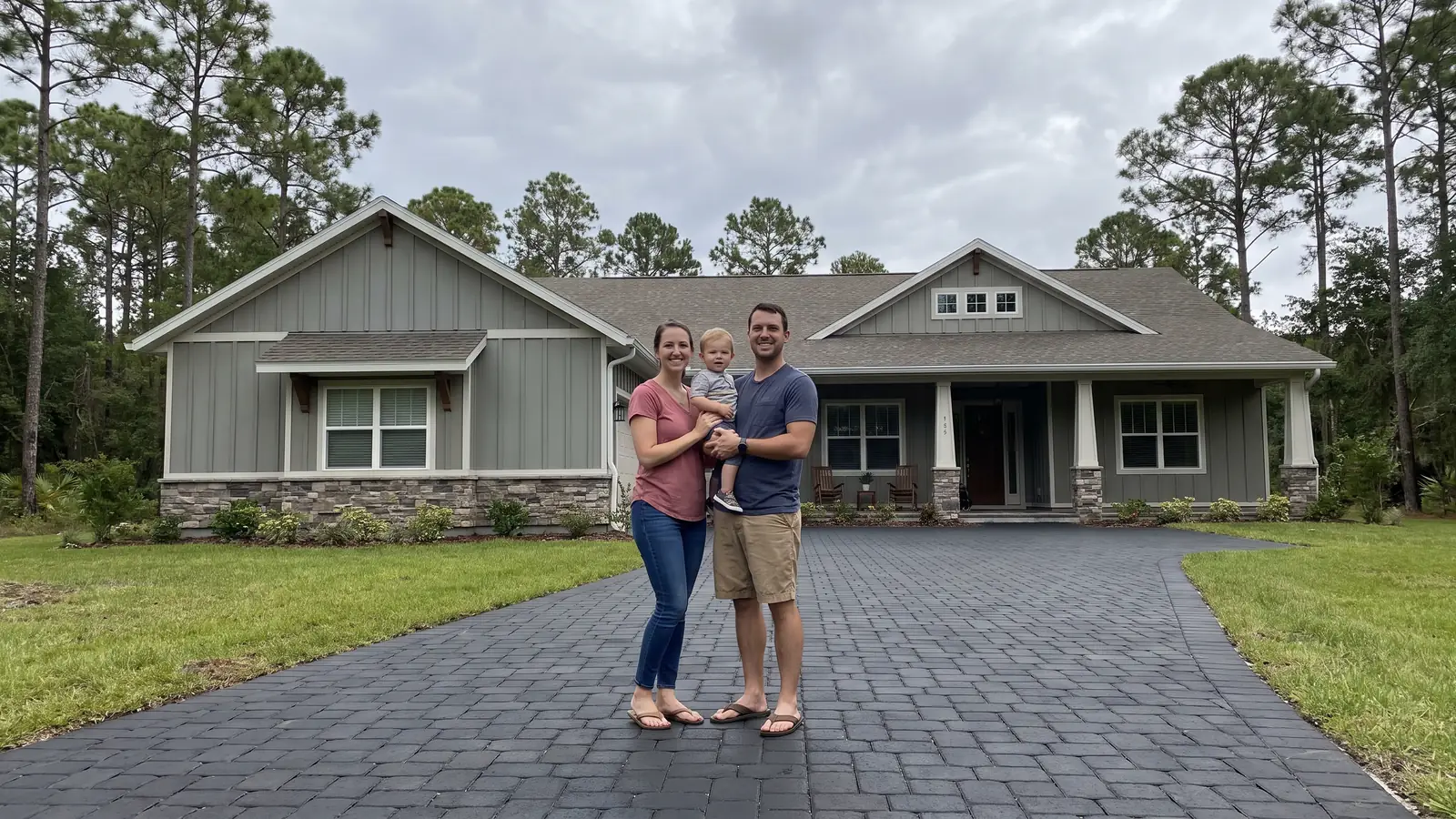
Paver sealing for Oceanway homes
Paver Sealing in Oceanway, FL
In Oceanway Manor or a new build, tired pavers get a free sealing estimate; call (904) 298-6542.
- Brings out deeper paver color
- Fresh joint sand helps lock pavers in place
- Gives weeds less room to grow
- Makes the surface easier to keep clean
- Free estimate, no obligation
Request a Free Estimate
Free, no obligation.
Fast, careful paver sealing in Oceanway
Paver sealing is available in Oceanway, whether your house sits on an older street in Oceanway Manor or in a subdivision built in the last few years. A local contractor washes, re-sands and seals driveways, walks and patios, and the estimate costs nothing. Ask for one and you will hear back within 1 business day, usually much sooner; to begin, ask for a free quote online.
Look at the driveway from the street. Gray streaks along the edge, sand gone from the joints and a tire-black patch by the garage can make a house look older than it is. A wash, new sand and a fresh coat take that away in a day or two. To talk through your own spots, call (904) 298-6542.
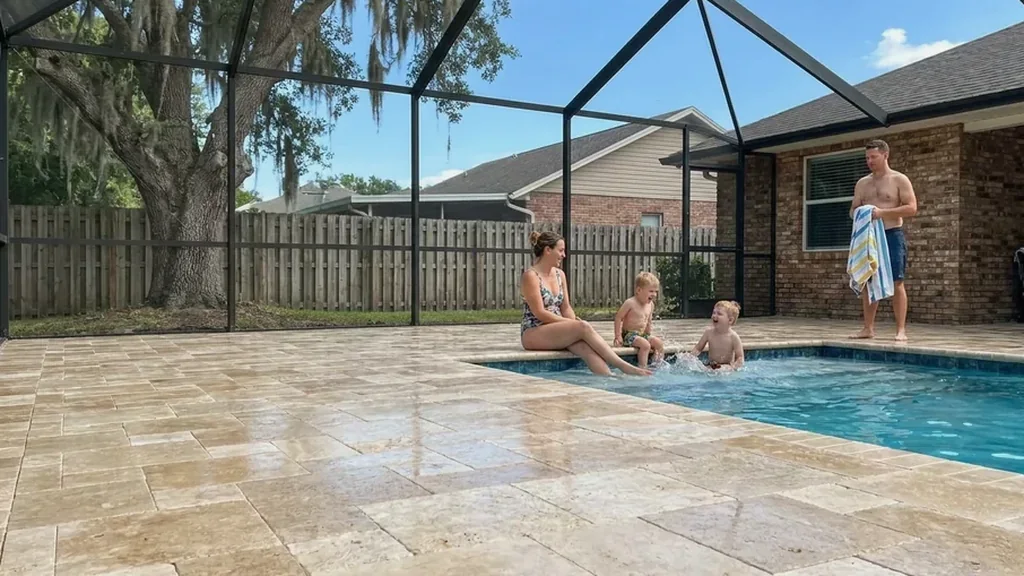
Why hire a local paver sealing contractor in Oceanway?
Oceanway has grown from farm land into a wide spread of subdivisions, so no two driveways have the same history. A local paver contractor can ask the right questions about yours, so ask for a free quote online.
Free estimate, no strings
The contractor looks at your Oceanway pavers, measures them and quotes the job. You owe nothing for the visit and you are not pushed to book.
A range to measure against
Companies across Northeast Florida publish $1.75 to $3.25 per square foot for the full clean, sand and seal.
Pick your own finish
A matte coat keeps a natural look. A wet look deepens color but shows scuffs sooner. The choice stays yours.
Questions answered first
Ask about drying time, stains or old coats before you decide. Oceanway homeowners get a plain answer and a written scope.
Get Your Free Estimate in Oceanway
Tell us about your pavers in Oceanway.
Free, no obligation
What paver problems show up most in Oceanway?
A film of silt after high water
Wikipedia notes that Hurricane Irma in 2017 flooded several Oceanway homes, and Jacksonville saw record flooding. Pavers that sat under flood water can keep a thin film of silt even after the water leaves. Sealer would lock that film in place. That is why the wash has to be thorough before any coat goes on. Bring up any past flood when you call, because it changes how long the wash takes. The same goes for a driveway that has a gentle slope toward the street, where silt gathers at the low end.
White bloom on pavers from a new build
Oceanway has added subdivisions since the early 1980s, and some homes are only a few seasons old. New concrete pavers often show a white deposit called efflorescence in the first or second season, and it fades with normal weathering. A Jacksonville company says to wait 30 to 60 days between installation and the first coat. A coat that goes on too early can seal in what should have faded. Waiting also lets the pavers settle their color, so the sealer locks in the final look. If you cannot remember the install date, an old closing folder or the builder's records usually have it.
Orange lines from the sprinklers
University of Florida extension says most Florida well water is high in iron and can leave rust on anything it touches. Orange stains often appear when that water is used for irrigation. If your Oceanway yard runs on a well, look for rust-colored streaks where the spray lands on the pavers. Those marks are treated before sealing, and the heads can be turned away from the pavers. Turning the spray heads away from hard surfaces is a small change that keeps new streaks from forming. Rust can show as a faint orange halo where the spray lands, which is easy to miss from the porch.
Joints that empty in one storm
Jacksonville gets about 52 inches of rain a year, mostly from May to September in short, hard downpours. The USDA describes the Mandarin soil series, first described in Duval County, as fine sand. The same company says sand leaves joints that were never sealed during summer storms. Open joints let soil in and weeds root, so fresh sand and sealer go together. That also explains why a driveway can look fine in spring and gap out by fall. Weeds that keep returning along the edge are often the first sign that sand has been leaving for a while.
Tire marks and oil by the garage
The spot where a car sits every night takes the worst of it. Oil, tire rubber and dripping fluids soak into bare pavers. A Jacksonville paver sealing company pre-treats stains before it seals, and says some deep stains may not come out completely. Point out your worst spot at the first visit, and you will hear plainly what can be done. Fresh sand under a sealed surface will not hide an oil spot, so the pretreat comes first. Pets, car washing and lawn care add their own marks, so mention them if you notice a pattern.
Does a 1958 Oceanway Manor driveway need a different plan than a new one?
Yes, because age changes the questions the contractor asks. Oceanway Manor dates to 1958, and its homes were built from 1948 to 1999, with sizes from 1,121 to 2,103 square feet. Streets like Moby Dick Drive and Shamrock Avenue have older pavers that may carry an unknown coat and worn joint sand. If your home is in the Manor, ask for a free quote online.
Newer subdivisions ask something else. Oceanway has grown since the early 1980s, and First Coast High School opened in 1990 to serve the growth in north Jacksonville. Homes only a few years old may have pavers still too fresh for a first coat, since the wait is 30 to 60 days after installation. Call (904) 298-6542 and give the contractor the date your pavers went in.
ZIP 32226 is large, with 85.663 square miles of land and 20,306 people in 2020. About nine in ten occupied homes are owner-occupied, which means most decisions on a driveway belong to the person who lives in the house. River City Marketplace, opened in 2006 east of Interstate 95, gives many neighbors a shared landmark. Mention it when you ask for a free quote online so the contractor can place your street.
What does paver sealing cost in Oceanway?
Published prices in Northeast Florida run from $1.75 to $3.25 per square foot for a full wash, re-sand and seal. In Oceanway, the spread comes from stains, lost sand and the size of the area. A wide driveway with a patio and a front walk adds up quickly, even at the lower rate. To see what your pavers cost, ask for a free quote online, and the estimate is free.
Condition changes the number more than the street name does. A relatively new driveway with clean joints is quick work, while one with silt, rust and tire marks takes longer to wash. Failed old sealer, if the contractor finds it, can cost extra to remove. Call (904) 298-6542 and ask which of these your driveway looks like.
| Paved area | Typical example | Clean, sand and seal |
|---|---|---|
| 300 sq ft | Small patio or walkway | $525 to $975 |
| 600 sq ft | Two car driveway | $1,050 to $1,950 |
| 1,000 sq ft | Large driveway or pool deck | $1,750 to $3,250 |
| 1,500 sq ft | Driveway plus pool deck | $2,625 to $4,875 |
Math based on the $1.75 to $3.25 per square foot that Northeast Florida paver companies published as of November 2026. Your contractor sets the actual price after seeing the surface. Repairs, leveling and stripping failed sealer are usually extra.
How does a paver sealing job work in Oceanway?
Find out how old the pavers are
The contractor begins with a question: when were the pavers laid, and has anyone sealed them? New ones may need a few more weeks. Older ones are checked for a previous coat, because water-based sealer cannot go over solvent-based. Sunken spots are marked for repair, since sealing over them preserves the dip. The contractor writes the date down so the plan is clear. Measurements are taken at this stage too, so the square footage in the quote matches the real area.
Scrub and pretreat the problem spots
Oil, rust and tire marks get treated before the main wash, which gives the cleaner time to work. The wash then lifts silt, green film and everyday grime. Some deep stains may not come out fully, and you hear about that before the coat. Rinse water runs away from beds and the house. Pretreat time varies with the stain, so the contractor may start on those spots first. Painted garage door edges and landscape lighting are protected before the wash begins.
Fill every joint with fresh sand
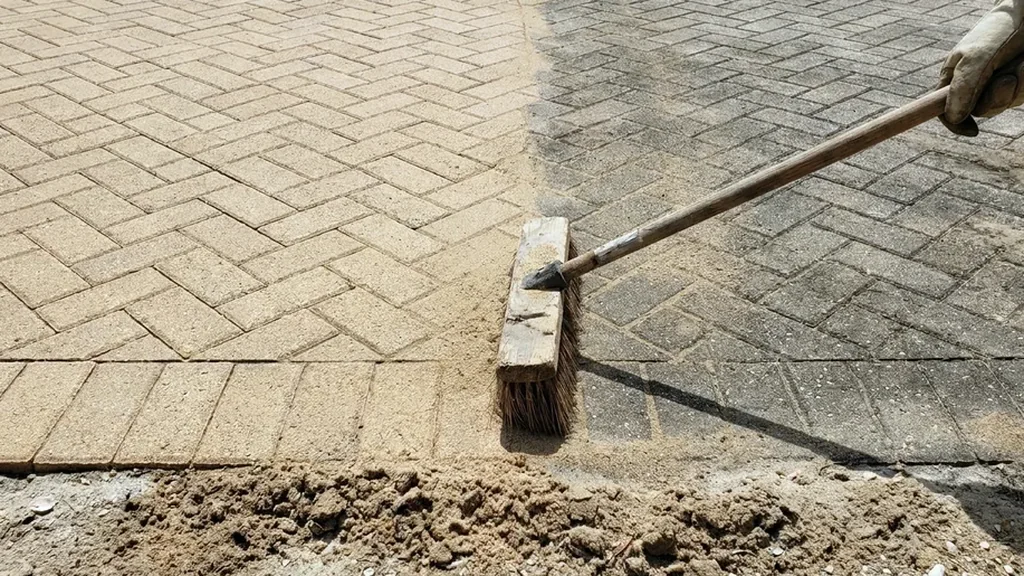
The wash takes joint sand with it, so the joints are refilled before sealing. Sandy ground and heavy summer rain empty joints quickly, and open joints invite weeds. The sand is packed in and the surface swept clean. A driveway with deep, open joints takes longer here. Colored joint sand can be an option if you want the joints to match. Any grass at the edge of the pavers is rinsed so the sand does not wash into the lawn.
Let the pavers dry out
Sealer needs a dry surface. Jacksonville rain is heaviest from May to September, so afternoon storms can end a plan. A careful contractor waits for a dry stretch instead of sealing damp pavers. The edges and shaded corners dry last. If rain is in the forecast, you are told the day before. Check the sky with the contractor on the morning of the job, since a dry start matters.
Coat, then keep off for a day
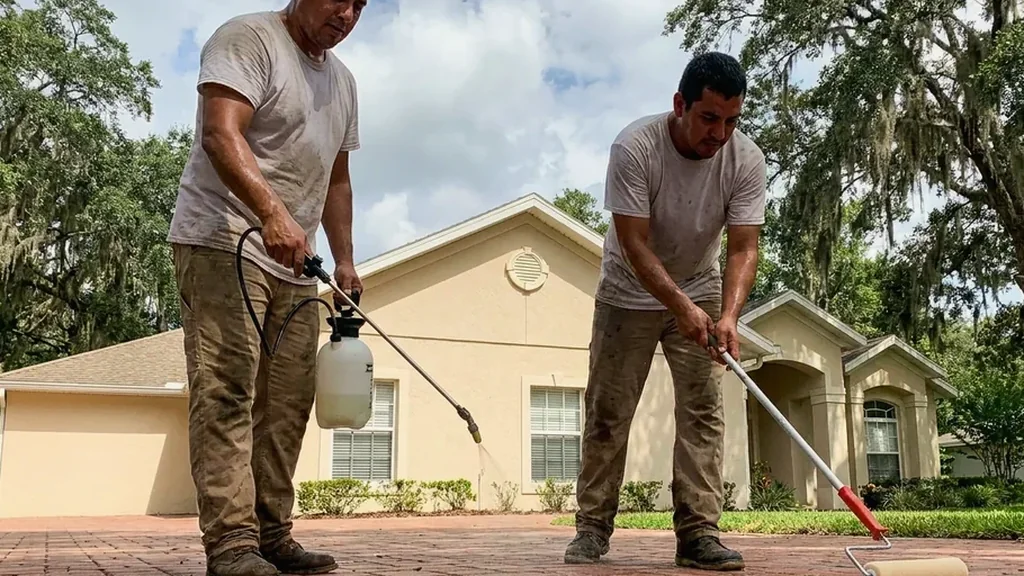
Sealer is sprayed and back-rolled to reach into the joints. People can usually walk on the surface in a few hours, while cars need more time. Scuffs show up quicker on a wet look than on matte. Expect two to five years before the next coat, the span companies often quote. Ask for the name of the sealer and the finish, and save it with your home papers. The contractor walks the job with you at the end and points out anything worth watching.
Complete paver services in Oceanway
An Oceanway paver job has four stages: a wash, new joint sand, a dry-out and the sealer coat. The order matters, because dirt under a coat stays there for good. Each stage has its own timing on sandy ground after rain. Call (904) 298-6542 to hear how the stages would run on your driveway.
Driveways in Oceanway take cars every day, walkways collect leaves and shade, and patios take sun and storms. Pool decks add splashing and sunscreen marks. The contractor writes each surface into the estimate so you can see what you are paying for. Tell them what you have when you ask for a free quote online.
Water-based and solvent-based sealers do not mix, so an earlier coat can decide the product. Wet look deepens color and shows scuffs sooner, while matte stays quiet. Two to five years is the usual gap between coats. Call (904) 298-6542 and ask which finish suits a daily-drive Oceanway driveway.
Timing in Duval County follows the rain, which peaks from May to September. Afternoon storms are common in summer, so a morning start helps. If the forecast turns, the date moves instead of the work being rushed. To set a day that fits your week, ask for a free quote online.
Questions to ask before you hire
- Do the people working on my property carry workers' compensation coverage?
- How many gallons of sealer do you expect my job to take?
- Can you take out the orange rust rings my well water sprinklers left before you seal?
- Does your price include the drive out to my house, or is travel billed on top?
- My pavers slope toward the garage, so where will the rinse water and extra sealer run?
- If a tropical storm is headed this way the week of my job, what date would you move it to?
- Will your estimate list each area you plan to seal and its square footage?
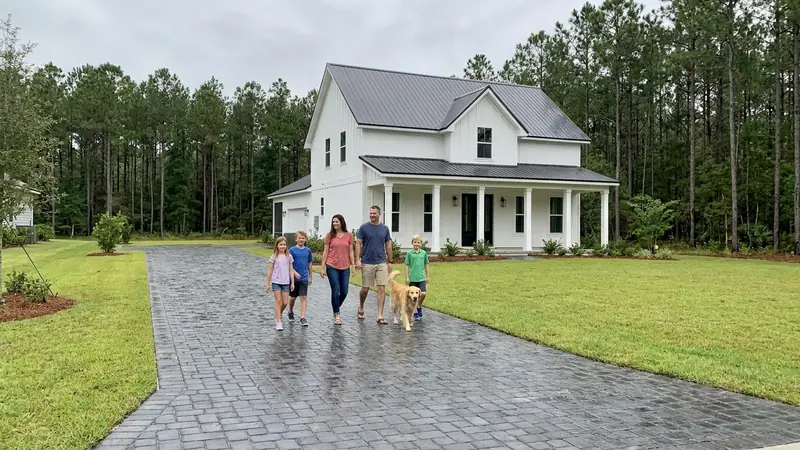
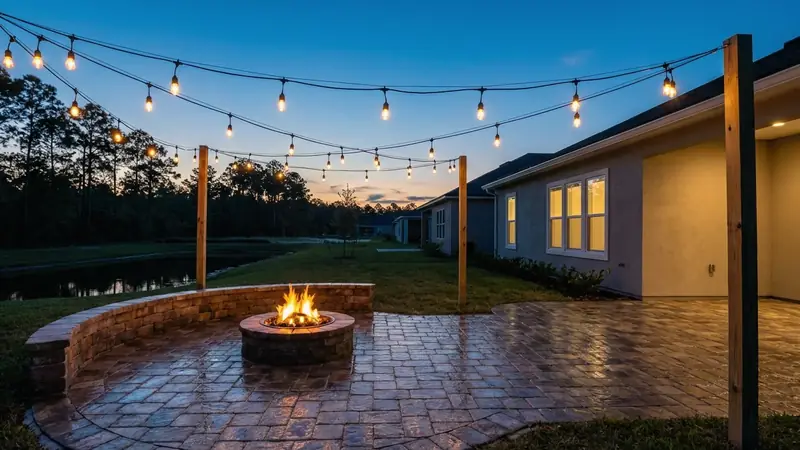
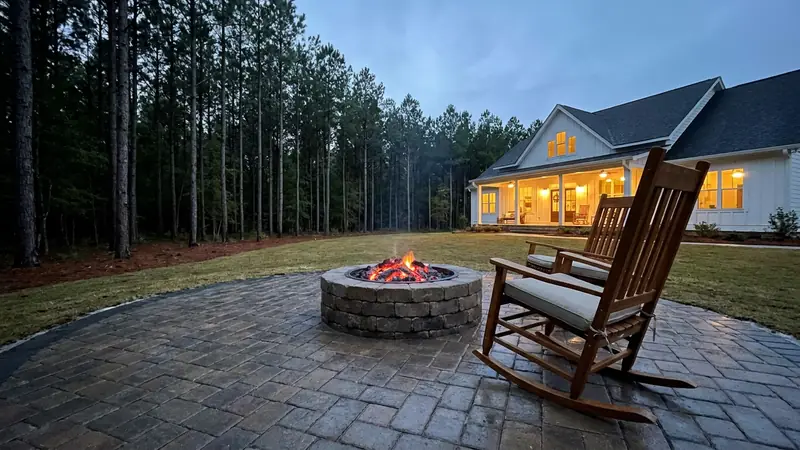
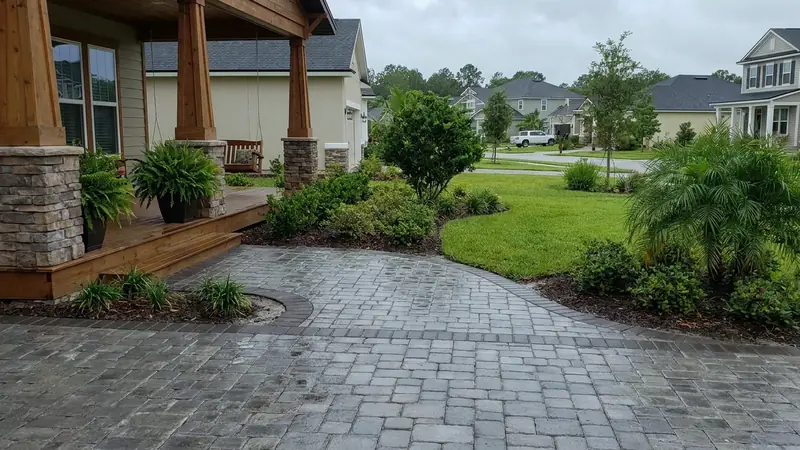
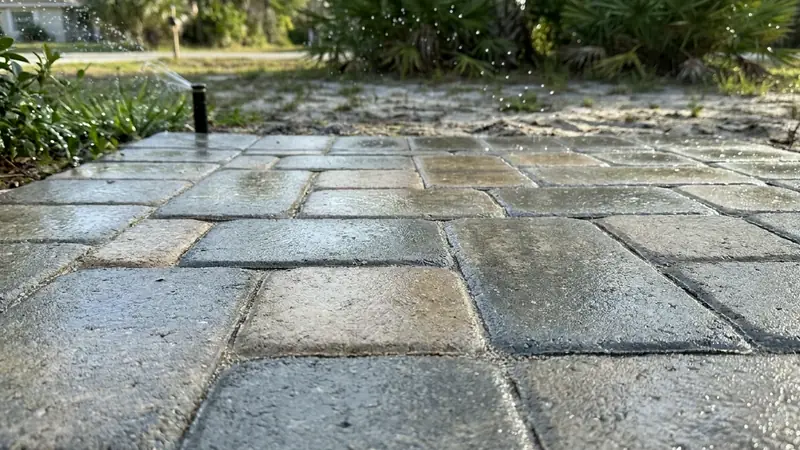
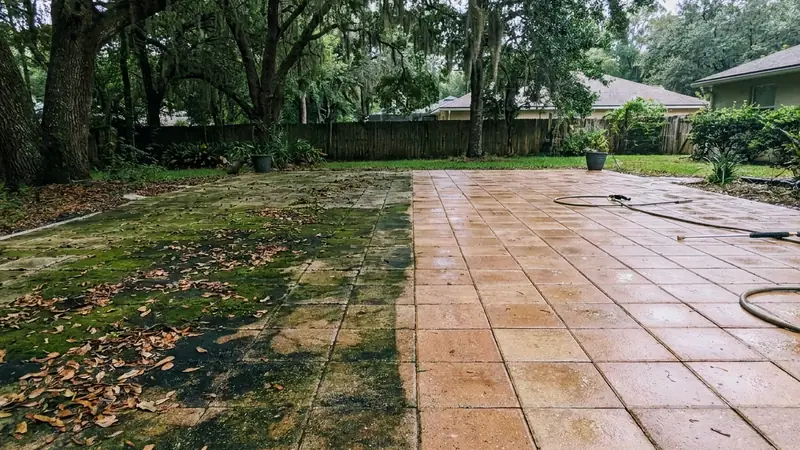
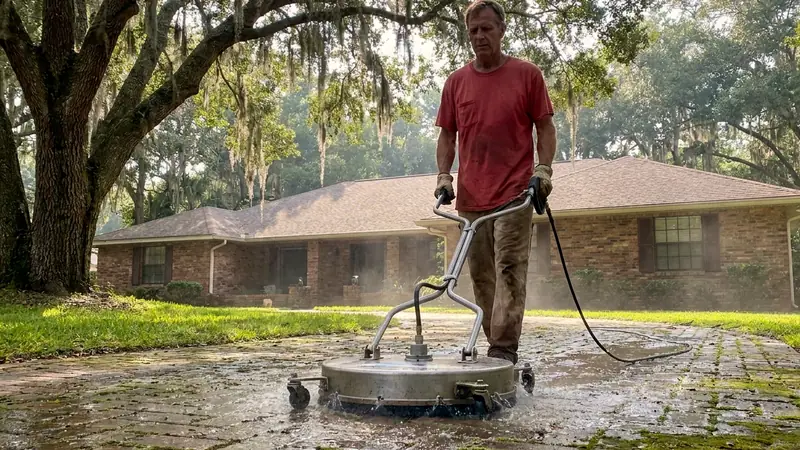
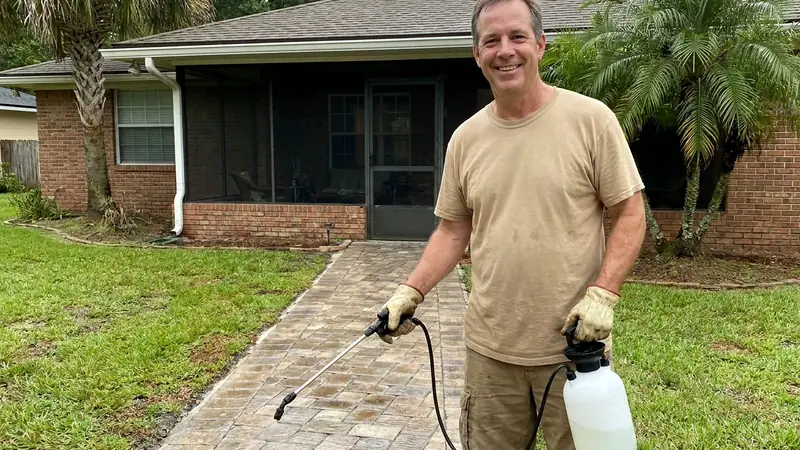
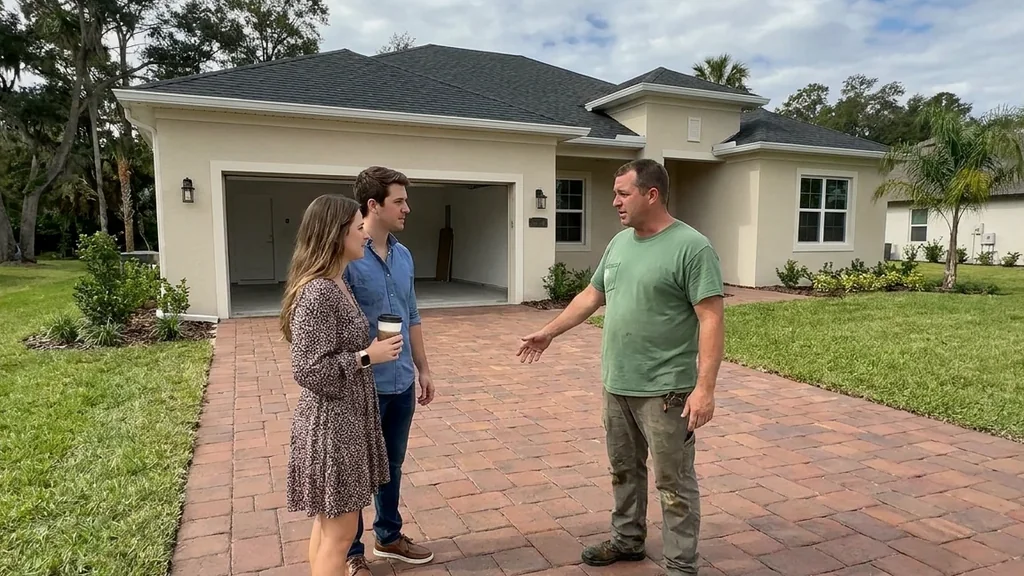
What do sealed pavers look like around Oceanway?
Why local matters in Oceanway
A contractor who works Oceanway knows how many different homes share one name. A 1958 house in the Manor and a subdivision home built this decade have little in common underneath. Asking when and how the pavers were laid is a local habit. To reach a contractor who covers Duval County's Northside, call (904) 298-6542.
Storm history matters here. After Irma flooded several homes in 2017, many owners learned how much silt a driveway can hold. A local contractor asks whether your street ever took water and plans the wash from there. You can ask for a free quote online and bring up any past flooding you remember.
Local knowledge also covers the ground. Fine sand drains quickly but holds joint sand poorly in hard rain, so the work focuses on joints. A contractor used to Duval County soils plans extra sand and a sealer that locks it in. If your joints keep emptying, ask for a free quote online and say so.
Where does Oceanway sit, and why does that matter to a paver job?
Oceanway is a neighborhood in Jacksonville's Northside, which joined the city with the 1968 consolidation, and its boundaries are loose. It was farm land once, with small farms and isolated houses, until growth began in the early 1980s. That mix of old lots and new streets is why every driveway needs its own look. If you are unsure whether your street is in Oceanway, call (904) 298-6542.
Wide open land is still close by. Pumpkin Hill Creek Preserve State Park lies about 12 miles north of downtown, and the Timucuan Preserve covers more than 46,000 acres of wetlands and waterways. River City Marketplace and First Coast High School give neighbors easy places to describe where they live. Name the nearest one when you ask for a free quote online.
Frequently Asked Questions
Why is paver sealing so expensive for an Oceanway driveway?
A sealing job is several steps, not one coat: a wash, new joint sand, drying time and the sealer. The published range of $1.75 to $3.25 per square foot covers all of that. Stains, lost sand and old coats push an Oceanway driveway toward the upper end, so ask for each area in writing. Write the price per square foot next to each area so nothing is a surprise.
Is there a pressure washing business in Florida that also seals pavers near Oceanway?
Yes, and the Google map results for this search are mostly Jacksonville paver companies. A local contractor handles both the wash and the sealing for an Oceanway home. Washing is the first stage, since sealer needs a clean and dry surface, and the wash removes joint sand that must be replaced. A free estimate covers the whole sequence. That answer is the same for a 1958 street and a new one.
What sealer should go on brick pavers at an Oceanway home?
The choice is between water-based and solvent-based sealer, in matte or wet look. An earlier coat decides first, since water-based cannot go over solvent-based. Ask the contractor for the product name and keep it for the next coat. Brick pavers may call for a different sealer than concrete. If your pavers are concrete, brick or travertine, say which when you call.
How long does sealer last on an Oceanway driveway in Florida?
The usual quote is two to five years between coats, and film-forming sealers are redone every 3 to 5 years, one Jacksonville company says. Daily car traffic is a good reason to plan near the shorter end. Sprinkle water on the surface: if it beads, the coat is still working. Jacksonville's driest months run from November through April, which suits a drying job.
Can Oceanway pavers be sealed after flood water has come through?
It can be, after the pavers are cleaned and have dried all the way. Flood water can leave silt, so the wash matters, and lost joint sand has to be replaced. Hurricane Irma flooded several Oceanway homes in 2017, so tell the contractor what your street went through. Ask for a look at the low end of the drive. Open joints and shaded corners are checked first after water.
What causes rust-colored lines on Oceanway pavers?
Irrigation is a common cause. University of Florida extension says most Florida well water is high in iron and can leave orange stains when used for sprinklers. These marks are treated before sealing, and turning the spray heads away helps keep them from coming back. The contractor can tell you whether a stain sits on the surface or has soaked in.
When can new pavers in Oceanway be sealed?
One Jacksonville company says to wait 30 to 60 days after pavers are installed. White bloom on new pavers is usually efflorescence, which is temporary and fades with weathering. Tell the contractor your install date. Pavers installed a few weeks ago usually need to wait. A date on the receipt keeps the sealing window clear.
How soon can I park on my Oceanway driveway after sealing?
People can usually walk on it within a few hours, but cars need longer. The exact time depends on the sealer and the day's weather. The contractor will tell you when it is safe. Pets and children should also stay off until then. A short walk-through at the end confirms the work looks right.
Nearby areas we serve
Ready for a Free Estimate in Oceanway?
Call (904) 298-6542 and tell us about your pavers.
Free, no obligation